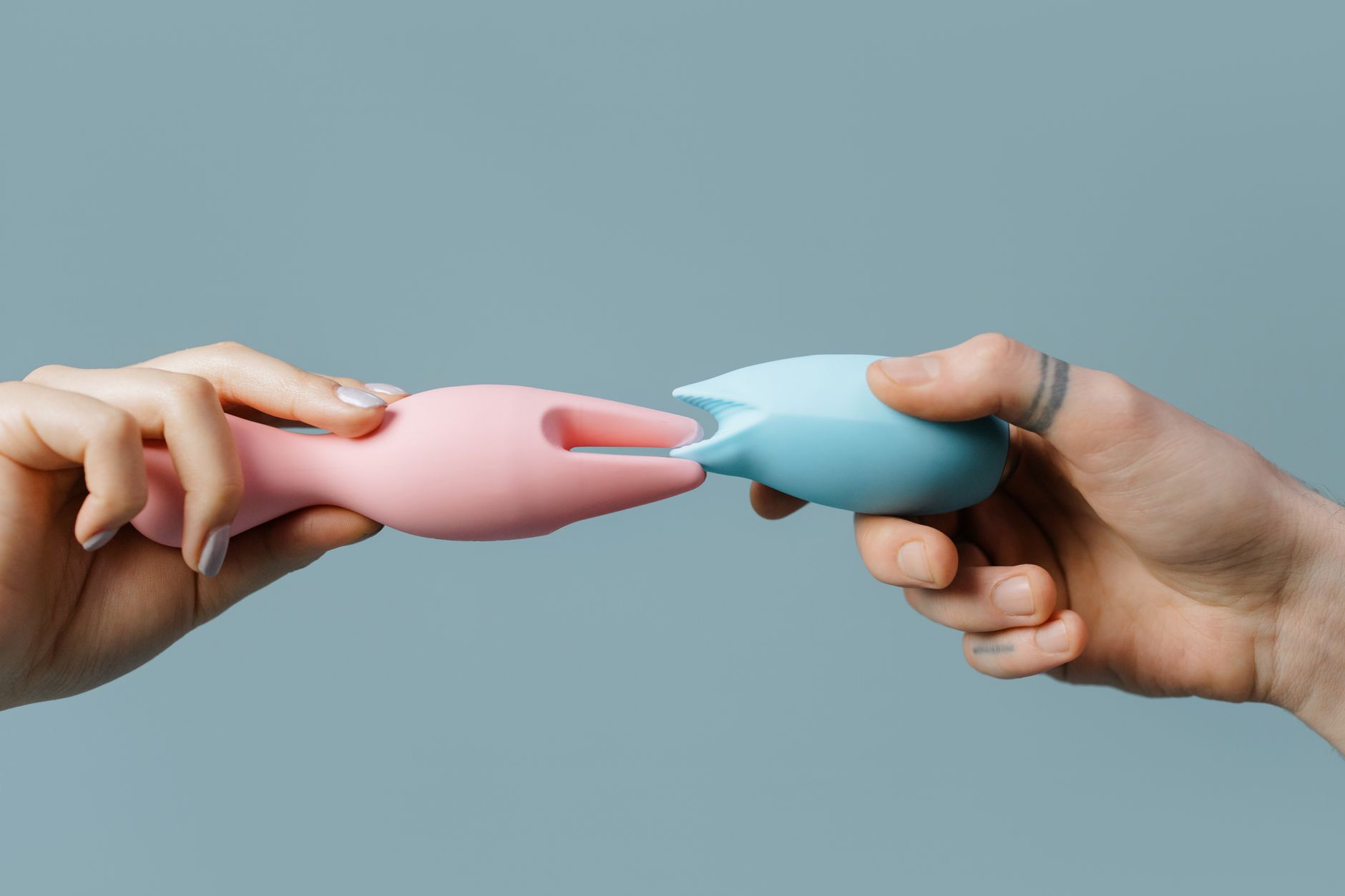
How to Use Lemon Vibrators When You're Over 40 and Haven't Explored Them Yet
Discovering clitoral vibrators later in life isn't catching up. It's permission. Here's why now is the best time to start and how to do it without overthinking.
If you're over 40 and you've never used a vibrator, you're not behind. You're not prudish. You're not missing out on some foundational sexual experience that everyone else figured out in their twenties. Most women over 40 who come to vibrators for the first time are starting because something shifted. A relationship ended. A body changed. A permission finally landed.
Here's the thing that research doesn't advertise loudly enough: clitoral sensitivity and blood flow patterns shift as we age. Between 40 and 50, many women find that the kind of stimulation that worked at 25 doesn't hit quite the same. The clitoris has nearly 8,000 nerve endings, but how those nerves respond to touch changes with hormones, blood circulation, and years of using the same techniques.
A lemon clitoral vibrator introduces variation. The Lem uses air-pulse technology that works differently from manual stimulation or traditional vibration. It doesn't require you to apply intense pressure, which means you can explore sensation without fatigue or numbness. For someone starting over at 40, that's not a workaround. It's an upgrade.
Your body isn't broken because it responds differently now. It's telling you that it's ready to learn something new.
I work with couples and individuals navigating midlife transitions, and the biggest barrier to pleasure exploration after 40 isn't the body. It's the story you've told yourself about who you are and what you deserve.
Maybe you grew up in an environment where masturbation was shameful. Maybe you've spent 20 years performing desire for a partner instead of feeling it for yourself. Maybe you've been conditioned to believe that needing a tool means something's wrong. Or maybe you've simply never had permission to prioritize your own sensation as an adult.
Bring that story into the room when you're introducing a lemon vibrator for the first time. Don't try to bypass it. Name it. "I'm nervous about this because I was taught that pleasure should be spontaneous, not planned." Once you see the belief, you can start to question whether it actually serves you.
Unlike traditional vibrators, the Lem and other lemon adult toys operate on suction and air-pulse technology rather than simple vibration. This matters for first-time users because it feels genuinely different from anything you've likely experienced. Here's what that means in practice.
Start at the lowest setting. The temptation is to jump to medium intensity because it "can't hurt." Resist that. The Lem has multiple pulse patterns at varying intensities. Begin at pattern 1 or 2 at the lowest power level. Your clitoris has millions of nerve endings concentrated in a small area. You're not trying to numb them into cooperation. You're trying to wake them up.
Give yourself 15 minutes minimum. If you're used to ten minutes and you're done, a new tool isn't going to change that in session one. This is about retraining your body's response to a new kind of input. That takes time. Put your phone away. Make it part of the process, not a test.
Expect it to feel weird before it feels good. The suction sensation is novel. Your nervous system is learning. Weird is not the same as wrong. Weird is just information. Keep going. By the third or fourth time, most people shift from "this is strange" to "okay, I see why this works."
If you're exploring lemon sexual toys for the first time as an adult, there's often a layer of guilt underneath. You might feel like you're betraying a partner, or indulging in something you should have outgrown, or taking time away from something more productive. That guilt is a feature of the culture you grew up in, not a reflection of what you actually need.
Here's what I tell my clients: your pleasure is not a finite resource. Solo exploration doesn't empty a tank that should be reserved for partnered sex. If anything, learning how your body responds when the stakes are low (only you involved, no performance pressure) makes partnered sex more connected. You know what you like. You can communicate it. You're less likely to dissociate or check out mentally.
Give yourself permission to do this for you. Not for a partner, not to "spice things up," not to prove you're not a prude. Just because your body is here and deserves attention.
Start by creating an environment where you feel safe and unrushed. This is not about ambiance in the romantic sense. It's about removing the baseline anxiety that comes with trying something new.
Charge your lemon vibrator fully before the first use. Nothing kills momentum like realizing it only has 30% battery and you're worried about it dying mid-session. Keep a bottle of water-based lubricant nearby. Not because you're broken or dry, but because it reduces friction and makes the sensation more clear and responsive.
If you're partnered, decide in advance whether you want to tell your partner or keep this private. Both are fine. But deciding beforehand means you're not making that choice under stress. If you do tell them, frame it as exploration, not criticism or request. "I want to learn more about how my body responds to different sensations" is different from "you're not doing this right."
Use your first session to understand the controls without pressure for results. Explore the pulse patterns. Notice which ones create sensation and which ones don't. Some people respond better to steady pulses. Others prefer rhythmic or escalating patterns. You're gathering data about yourself.
Using lemon clitoral vibrators for the first time at 40 or 50 or 60 is part of a larger conversation about reclaiming your nervous system. Decades of living teach you to negotiate your needs, shrink yourself for others, and accept whatever pleasure comes your way. A vibrator is a tool that makes it harder to dissociate. It demands that you pay attention to sensation. It requires that you prioritize your own response instead of performing for someone else's.
That's not a luxury. That's a recalibration.
Many people also find that returning to pleasure after depression or major life transitions comes easier with a tool that creates clear, measurable sensation. A lemon sexual toy removes the uncertainty. You're not waiting to feel something spontaneously. You're actively exploring.
Will using a vibrator make me dependent on it? No. Pleasure is like a muscle. Using new tools strengthens your capacity to feel sensation. You'll likely find that your body responds more easily in general, including without a toy.
Will my partner feel threatened? Some do initially. Usually because they assume it means they're not enough. The conversation that helps: "This is about learning my own body, not about what's missing with you." If a partner consistently feels threatened by your solo pleasure, that's worth exploring separately.
Will I be able to feel "normal" stimulation again? Yes. Your clitoris has 8,000 nerve endings. A lemon vibrator isn't rewiring them. It's offering a different path to the same destination.
Am I too old to be starting this? No. And also, what does "too old" even mean? If you're alive and your body works, your pleasure matters.
Completely normal. Your nervous system is processing a new sensation while your mind might be managing anxiety about the whole situation. The Lem and other lemon adult toys take a few sessions to "click." You're not broken if it doesn't feel explosive immediately. Most people report that the third or fourth session is when sensation actually registers as pleasure.
That depends on your partner, but also on how you frame it. If you approach it as shame ("I have to hide this"), they might pick up on the energy. If you approach it as curiosity and self-care ("I'm exploring what my body responds to"), most partners respect that. If a partner judges you for solo pleasure, that's information about their insecurity, not about you.
There are no required results. You're not trying to achieve orgasm faster or more reliably. You're learning sensation. That said, most people who use a lemon vibrator 1-3 times per week report that their overall responsiveness improves within two weeks. Your nervous system responds to consistency.
Start with exploration. Try different patterns and intensities across a few sessions. Most people find one pattern that creates the strongest sensation, but you might discover that different patterns feel good in different contexts. There's no wrong answer.
That guilt has a source. Usually it's something you were taught about whose needs matter and whose time is justified. Notice the guilt without judgment. Say it out loud: "I was taught that my pleasure doesn't matter as much as productivity or service to others." Then ask yourself if that's still true for you. Most people over 40 realize it's not.
Yes, often. One of the reasons orgasm becomes harder with age is reduced blood flow and changing hormone patterns. The suction and air-pulse technology of lemon clitoral vibrators works differently than your hand or a partner's body. It can create the specific pattern and pressure your nervous system needs now. That said, if orgasm was always difficult, a vibrator might help you reach it, or it might help you feel more sensation without needing orgasm as the goal.
Your body at 40 is not a younger body that's been used up. It's a different instrument that knows itself better. When you start exploring with a lemon vibrator, you're not catching up on something you missed. You're beginning something new with the advantage of decades of self-knowledge.
Give yourself grace in the learning curve. Your nervous system will adapt. Your pleasure will deepen. And the fact that you're willing to try something unfamiliar at this stage of your life is not small. That's courage.
If you have questions about how to integrate pleasure tools into your relationship or navigate the emotional side of this exploration, reach out to us. That's what we're here for.