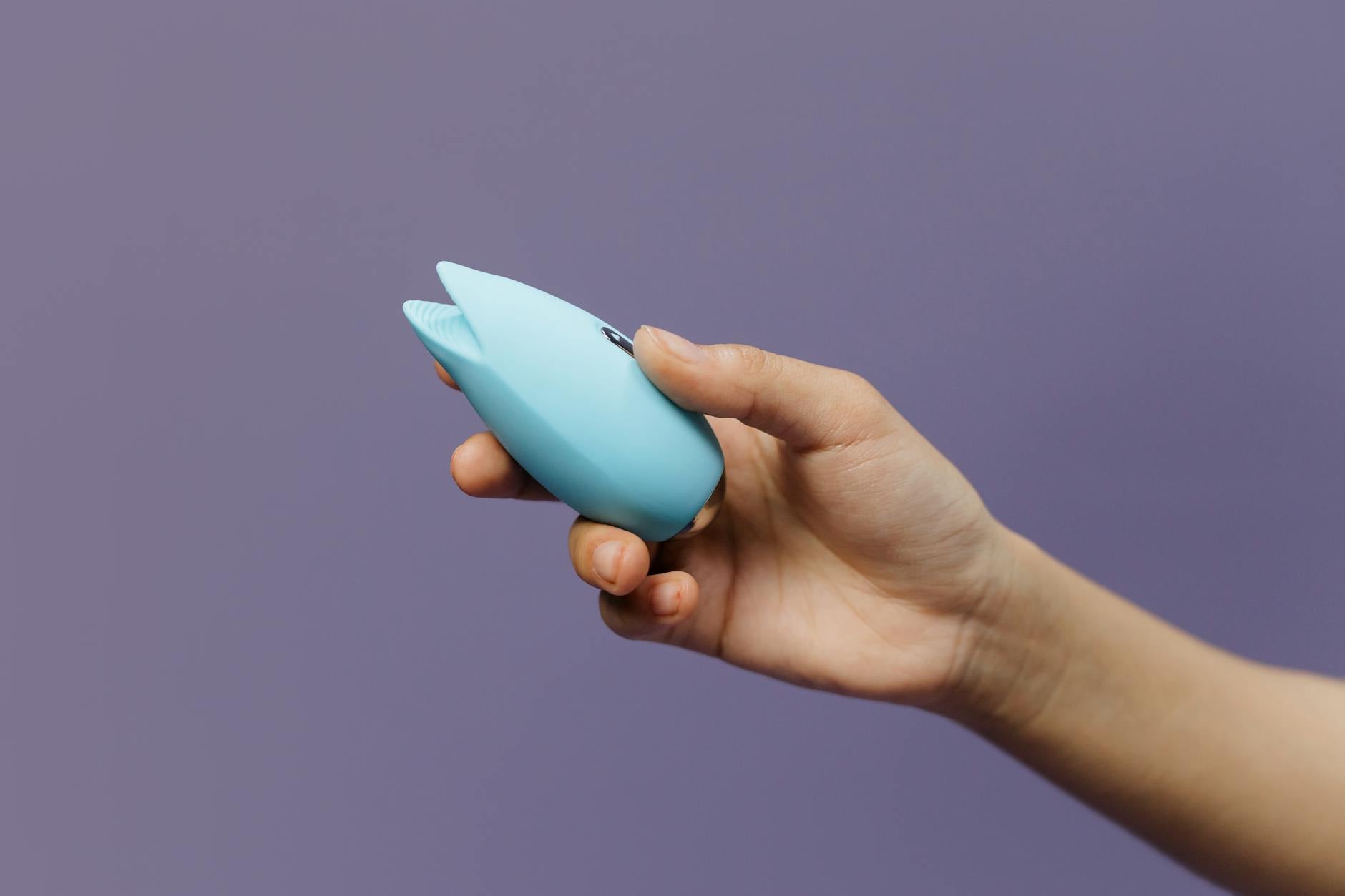
Let's be real: you're exhausted. Your to-do list is longer than your attention span, your nervous system is running on fumes, and the last thing your body wants to do is feel anything. So when your partner (or you, alone) suggests sex or pleasure, your brain offers a flat "no thanks." It's not that you're not attracted. It's not that the relationship is broken. It's that your stress response has literally dimmed your desire.
When you're under chronic stress, your body floods with cortisol. That same cortisol suppresses dopamine and testosterone, both major drivers of sexual desire. Your nervous system gets stuck in fight-or-flight mode, which means blood flow stays concentrated in your limbs (ready to fight or run) rather than flowing to your genitals. Your brain becomes hypervigilant, scanning for threats instead of opening to pleasure. Sex becomes another task on the to-do list, one more thing you're failing at.
Worst part? This creates a feedback loop. Stress kills libido. Low libido creates relationship friction or self-criticism. That friction and criticism increase stress. The cycle deepens.
The good news is that even small, intentional moments of pleasure interrupt this cycle. You don't need hours. You don't need to feel motivated. You just need the right tool and the right conditions.
Here's what makes lemon vibrators different from other sex toys when you're running on empty: they require almost no effort from you, and they work fast.
The suction mechanism on a lemon vibrator (like the core design of The Lem) doesn't require you to be highly aroused already. It stimulates nerves directly, bypassing the "I need to be turned on first" barrier that blocks a lot of stressed people. You can start at low intensity and let the vibrator do the neurological work of building arousal for you. Your job is just to be present.
Speed matters too. When you're burned out, you can't afford a 45-minute foreplay session. Lemon clitoral vibrators get results in 10-15 minutes. Some people find pleasure in 5. That's not cheating pleasure. That's meeting yourself where you are.
The other piece is gentleness. Stress often makes the pelvic floor tense and defensive. You need a toy that can work around that tension rather than fighting it. The suction action of a lemon vibrator is less mechanically intense than traditional vibration, which matters when your body is already braced.
Before you even pick up The Lem or any lemon vibrator, create a container for this moment. This is not about spontaneity or romance. It's about signaling to your nervous system that this 15 minutes is non-negotiable rest.
1. Get physically comfortable. Not hot and bothered. Comfortable. Warm bed, your favorite sweater, whatever makes your body feel held. Your nervous system won't relax into pleasure if you're physically tense or cold.
2. Turn off notifications. Put your phone in another room or in airplane mode. Cortisol spikes every time you hear a ping. You cannot relax with that threat lingering.
3. Do one grounding thing. Deep breath, five seconds in, seven seconds out. A glass of water. Touch your face or hands with warm water. Spend 60 seconds telling your body "you are safe right now." This sounds simple because it is simple. And it works.
4. Set a timer for 15 minutes. This sounds counterintuitive, but it removes the mental load of "how long should this take?" Your brain can stop optimizing and just be.
Start with pattern one. Not pattern three. Not the "intense" setting. Pattern one, which on The Lem is barely perceptible until you feel it against your skin.
Approach your vulva slowly. Notice what you notice. Numbness is normal when you're stressed. Absent sensation is normal. That's not a failure. That's just information. The vibrator's job is to wake up nerve endings that have been asleep. That takes a few minutes, not seconds.
Move the toy slowly around your clitoris. Not directly on it at first. The entire vulva has sensation. The labia, the inner thighs, the perineum. Lemon vibrators are good at diffusing sensation across a wider area rather than concentrating it. Use that.
If you feel nothing after five minutes, that's okay. You can stay at pattern one for the full 15 minutes. Pleasure isn't the goal here. Nervous system regulation is the goal. Some of my clients find that relief arrives not during the session but 30 minutes later, when they notice their shoulders are dropped and their jaw is unclenched. That counts.
If you do start feeling something, you can move to pattern two. Notice whether intensity builds pleasure or whether it flattens it. Stressed bodies sometimes respond better to consistent, lower intensity than to escalation.
Best time: Sunday evening or a day off, when you have mental space and no major stressors looming. Your nervous system is already slightly more available.
Okay time: Right after work, before you check email or mentally spiral into evening tasks. The transition window, before stress compounds.
Harder time: Right before bed if you're also dealing with insomnia. Arousal can spike energy, which you don't want. Better to do this earlier and let the calm arrive later.
Worst time: During peak stress (right in the middle of a crisis or deadline crunch). Your nervous system is too locked down. Wait three days until the acute stress has passed.
Most burned-out people carry a belief that feels like truth: "I don't have a libido anymore. Sex is not for me right now." This is a story stress tells. It's not a diagnosis.
When you use a lemon vibrator and feel pleasure arrive (even small pleasure, even just a moment of it), you're not being selfish or pretending things are normal. You're interrupting the stress-libido feedback loop. You're telling your nervous system that pleasure is still available to you, that you're still embodied, that you can still feel good.
One session with a lemon clitoral vibrator won't cure burnout. That requires work on the stressors themselves: boundary-setting, task reduction, maybe therapy. But one session can crack the door open. It can remind you that the desire is still in there, just sleeping, not dead.
If you have a partner, this also signals something important: "I'm choosing us, even in exhaustion. I'm showing up for my own pleasure, which means I'm showing up for connection too."
If you're in a relationship, you might be tempted to skip solo exploration and go straight to partnered pleasure. I'd encourage the opposite.
Use a lemon vibrator solo first. Find your own rhythm without anyone else's needs or presence. Once you've reactivated your pleasure circuitry alone, bringing a partner in is easier and less pressured. They're not the one who has to fix you. You've already fixed the basic circuit.
When you do include a partner, they can hold the toy while you relax, or they can use it on you while you focus on receiving. The point is: you've already done the hard work of lowering your barrier to arousal. Now they're just a presence, not a pressure.
Yes. Numbness is one of the main reasons people reach for a clitoral vibrator when stressed. The direct stimulation from lemon vibrators can wake up nerves that feel asleep. Start with low intensity and give it time. Sensation often returns over several sessions, not the first one.
Once or twice a week is enough to interrupt the stress cycle without adding performance pressure. This isn't about frequency. It's about consistency and permission. Some weeks you'll do this three times. Some weeks once. Both are fine.
That's real, and it's worth naming. Solo pleasure during burnout isn't a substitute for partnership or desire. It's a reset button. If the numbness extends to all connection, not just sex, that's a sign to talk with a therapist or couple's counselor about what's underneath the stress.
It can, but slowly. Pleasure doesn't always return naturally when stress is chronic. Using a lemon vibrator actively signals to your nervous system that pleasure is still available, which speeds the return. Think of it as coaxing a restart rather than waiting for one.
Yes, and it's unfounded guilt. Using a lemon vibrator is being present. You're present with your own body. You're choosing connection, even in exhaustion. That's the opposite of checked-out. If a partner frames it as selfish, that's a conversation about their relationship fears, not about your pleasure.
Then stress has a stronger grip than one session can break. That's when you're also looking at sleep, nutrition, maybe antidepressants if clinical depression is underneath the burnout, definitely professional support. A lemon vibrator is one tool. It's not the whole toolkit. But it's often the first thing that shifts something, because it's low-pressure and fast.
There's a cultural narrative that says pleasure is a luxury, something you earn after productivity. When you're burned out, pleasure feels like laziness or selfishness. It's neither. It's medicine. It's the nervous system realizing "okay, I can rest now." It's cortisol dropping. It's dopamine rising. It's your body remembering that it's alive and capable of feeling good.
A lemon vibrator won't fix the 60-hour work week or the impossible deadlines or the relationships that drain you. But it can give you proof, in 15 minutes, that you're still in there. That desire is still possible. That your body is still yours.