
Here's the thing about trauma and touch
Pleasure after trauma isn't a straight line. It's not even a line at all. It's a feedback loop where your nervous system is trying to keep you safe while another part of you wants to feel alive again. That friction is real, and it's not a failure.
Many of my clients who've experienced sexual trauma describe a strange disconnect: desire is there, but the moment actual touch happens, the nervous system hijacks the experience. Panic, numbness, dissociation, or rage can show up uninvited. Using lemon vibrators after trauma works differently than for anyone else because the tool has to serve a different purpose first. Control. Then pleasure.
Why lemon clitoral vibrators are different for trauma recovery
A vibrator puts you in charge in ways partnered sex often can't. You control the intensity, the rhythm, the moment it stops. That control is not secondary to pleasure. It's foundational to healing.
Lemon vibrators, specifically, use gentle suction-based stimulation rather than direct vibration. This matters for trauma recovery because suction-based pleasure feels fundamentally different from the kind of touch that might trigger memories or body-based fear responses. The sensation is diffuse, building, less likely to jolt your nervous system into fight-flight-freeze mode.
Also, starting with clitoral stimulation alone means you're not managing penetration anxiety at the same time. Single-task pleasure while you're rebuilding is strategic, not limiting.
Grounding first, stimulation second
Before you use any lemon sexual toy, build a container. Your body needs to know it's safe.
I recommend starting with what I call a "ground check." Spend 5 minutes before any solo session in your physical space. Notice: the temperature of the air, the texture under your hands, the weight of your body on the chair or bed, sounds around you. Name three things you can see, three you can touch. This isn't woo. It's neuroscience. Grounding signals to your nervous system that you're present and safe in this moment, not in the moment the trauma happened.
Some of my clients add a ritual: they light a candle, text a trusted friend to say "starting now, I'll check in after," or they have a specific blanket they wrap around themselves. The ritual says "this is intentional, this is mine, I have permission."
Then you can reach for the Lemon clitoral vibrator. Not before.
How to actually use it (trauma-informed pacing)
Turning it on at the lowest setting is table stakes. Pattern 1 or 2. You're not looking for fast arousal. You're looking for information.
Hold the vibrator near but not quite touching the clitoral area for the first 30 seconds. Let your body register the sensation before you make contact. This isn't hesitation. This is giving your nervous system a preview so it doesn't surprise itself.
When you touch down, stay there. Don't chase sensation. The temptation is to move around, change patterns, find the "right spot" faster. That urgency comes from learned patterns. Instead, commit to one spot for 2-3 minutes. Your clitoris will likely become more responsive as blood flow increases and your nervous system settles.
If at any point you feel the urge to stop, stop. This is not quitting. This is your nervous system giving you information. You can pause, do a ground check, and decide whether to continue or call it done for today. Both are wins.
When dissociation shows up
Dissociation is when your mind checks out during intimacy. You're physically there but mentally absent. It's a protection mechanism your nervous system learned, and it can show up even when you're alone.
If you notice you're floating, numb, or watching yourself from outside your body, pause. Don't push through. Press the vibrator against your thigh or collarbone instead of your genitals for 30 seconds. Feel the sensation somewhere that doesn't carry trauma charge. Wiggle your toes. Say your name out loud. These interrupt the dissociation spiral.
You can return to genital stimulation after you're back in your body, or you can stop here. If dissociation is frequent, talk to a trauma-informed therapist about it. Lemon adult toys are helpful, but they're not treatment.
Building capacity over time
The first time you use a lemon vibrator after trauma, the goal is not orgasm. The goal is "I tolerated this, I stayed present, I felt something, and I'm safe." That's a massive win.
Over days and weeks, you can start to expand. Maybe you increase the time from 5 minutes to 10. Maybe you try pattern 3. Maybe you experiment with different positions or times of day. These are experiments, not milestones you have to hit.
Some of my clients find that arousal takes a long time to show up, even with a tool as responsive as the Lemon clitoral vibrator. That's normal. Trauma can blunt arousal signals for months or years. Consistency and patience matter more than intensity.
When to work with a therapist alongside this
If trauma is recent or severe, do not use a vibrator as a replacement for professional support. EMDR, somatic experiencing therapy, and trauma-focused cognitive behavioral therapy are evidence-based and they work. A vibrator is a supplement to healing, not the healing itself.
A trauma-informed therapist can help you distinguish between what's nervous system protection and what's your actual desire. They can help you titrate the process so you're building capacity without retraumatizing. If you're in the US, ISSTD.org and RAINN.org have therapist directories.
Permission structures that help
One thing I notice with my clients who have trauma histories: they often don't feel like they deserve pleasure. So before you use any lemon sexual toy, say it out loud: "I deserve to feel good." Say it even if you don't believe it yet. Especially if you don't believe it yet.
Some people write themselves permission slips. Some people keep a small note next to their bed. Some people just text it to a trusted friend. The mechanism doesn't matter. What matters is that you're actively counteracting the internal message that says pleasure is not for you.
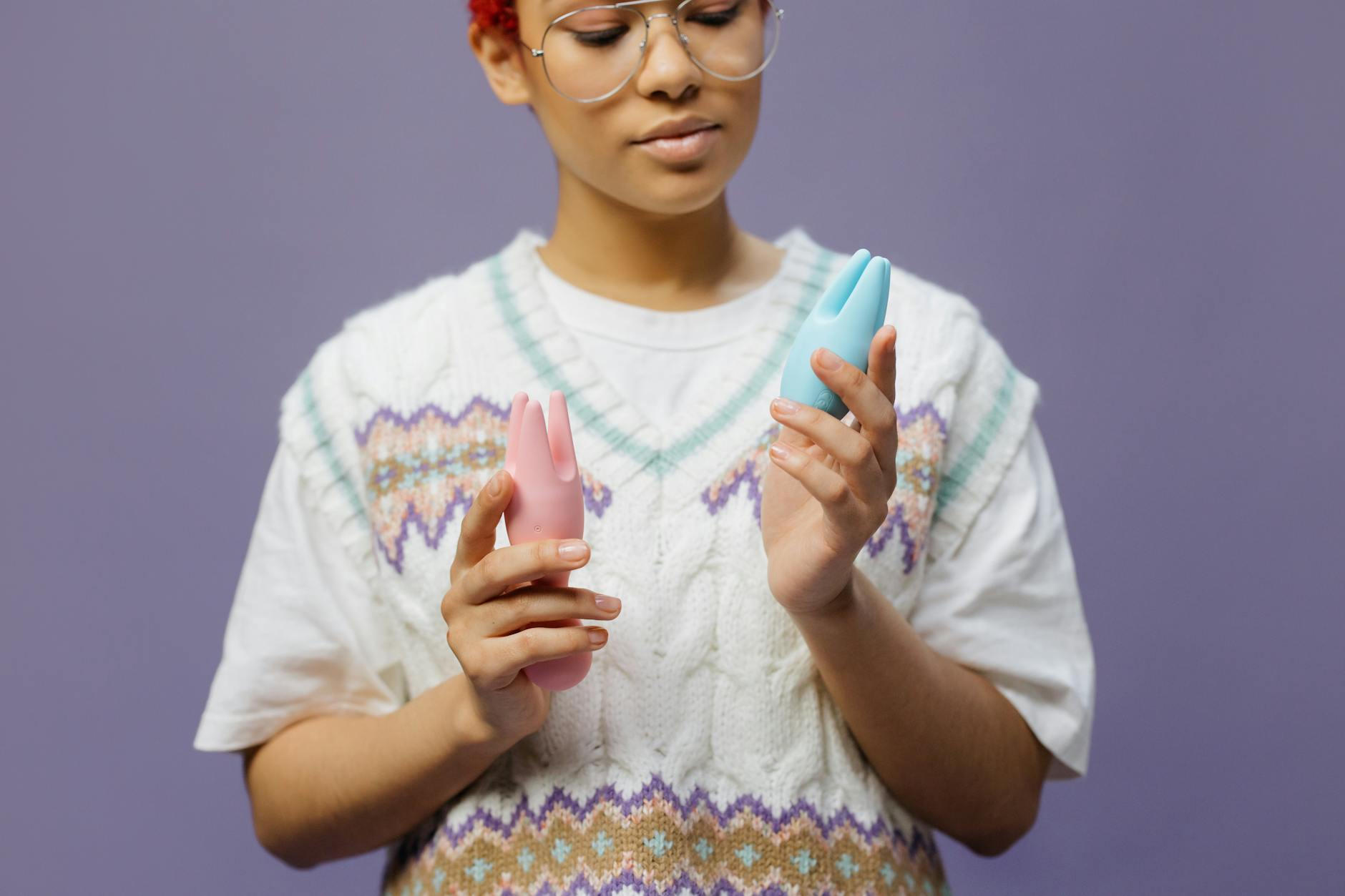
Photo by cottonbro studio on Pexels
The nervous system is not linear
You will have days where it works beautifully. You will have days where it feels impossible. Both are valid. Your nervous system isn't broken. It's remembering something it's trying to keep you safe from.
Here's what I know after 20 years working with people rebuilding pleasure after trauma: it does come back. Not the way it was before. Differently. Often more consciously, more chosen, more yours.
Lemon vibrators are a tool for that process. They're not the whole thing, but they're a really good part of it.
Frequently asked questions
Can I use a lemon vibrator if I'm still actively experiencing trauma?
Yes, but with support. If you're in an unsafe situation or actively traumatized, prioritize professional help first. A vibrator can be part of your toolkit, but it shouldn't be your only one. Work with a trauma-informed therapist who can help you gauge whether now is the right time to introduce stimulation.
What if I can't orgasm even with the Lemon clitoral vibrator?
Orgasm is not the goal when you're healing from trauma. Presence is. If you're staying grounded, noticing sensation, and feeling safe, that's success. Orgasm may come later. Many of my clients find that their first post-trauma orgasm happens weeks or months after they start using a vibrator, and that's completely normal.
Should I tell my partner I'm using lemon adult toys for trauma recovery?
That's your call. Some people find it healing to share. Others need solo exploration first. If you do tell them, frame it as "I'm working on something for me" rather than an invitation to participate until you're ready. Consent includes the right to privacy.
What if touching myself triggers panic?
Start with non-genital touch first. Use the vibrator on your forearms, neck, or collarbone. Build familiarity with the sensation in places that don't carry trauma charge. When you're ready to move genital, you've already established a positive association with the tool.
Is it normal to feel guilt about pleasuring myself after trauma?
Absolutely, and it's also not true. Pleasure is not complicit with what happened. Your body deserving to feel good has nothing to do with the harm you experienced. If guilt is intense, that's something a therapist can help you work through.
How long does it take to feel comfortable with lemon vibrators again?
This is different for everyone. Some people feel shift in weeks. Others take months or years. The timeline is not the point. Consistency and self-compassion are. Show up when you can, stop when you need to, trust the process.
You're reclaiming this
Pleasure after trauma is an act of resistance. It's you saying to your nervous system, "I survived that, and I'm allowed to feel good now." That's not selfish. That's reclamation.
Lemon vibrators can help you get there. So can a therapist who specializes in trauma recovery. So can grounding, patience, and permission. Use all of it.
You're not broken. You're rebuilding. That takes time, but it works.