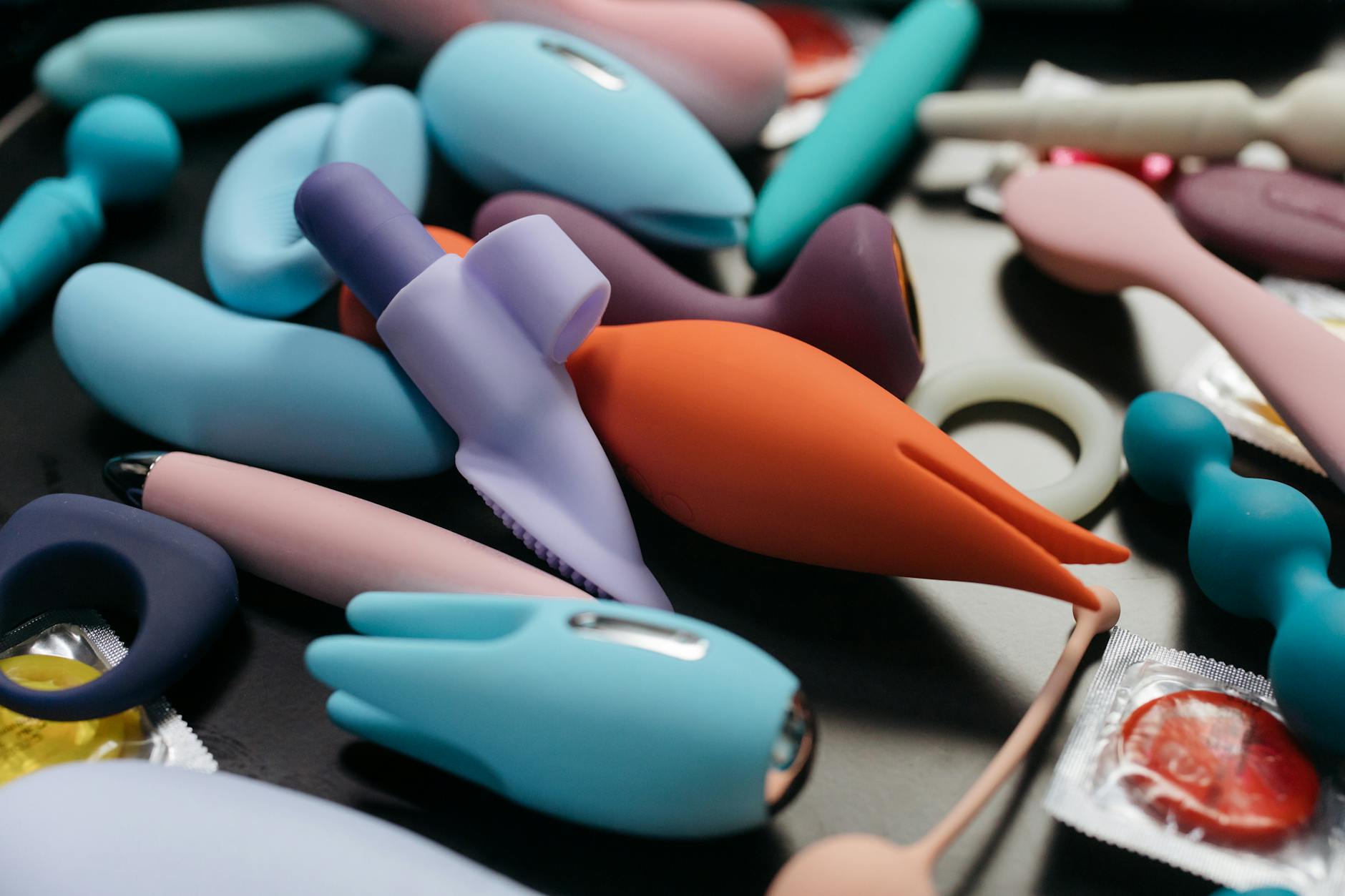
Let's name the thing nobody talks about
Antidepressants work. They pull you out of the dark, stabilize your thoughts, make waking up feel possible. And then they flatten your orgasms into something that feels like watching your own pleasure from three rooms away.
This is not in your head. This is not you being broken. This is one of the most common and least discussed side effects of SSRIs and SNRIs. You're not alone, and it's fixable.
What antidepressants actually do to sensation
SSRIs work by increasing serotonin in your brain. This is good for mood. It's less good for genital sensation because serotonin also suppresses dopamine in the reward pathway. Lower dopamine means arousal builds slower. Orgasms take longer (if they arrive at all). The intensity, when it does come, feels muted.n It's not that sensation disappears completely. It's more like someone turned down the volume.
Some people also experience delayed ejaculation or anorgasmia (the inability to orgasm despite arousal). The mechanism is the same: serotonin elevation dampening the dopamine surge that triggers climax.
Here's what's important to know: this is dose-dependent and medication-dependent. Some SSRIs (paroxetine, fluoxetine) are more likely to cause sexual side effects than others (sertraline, bupropion). And your body can adapt. Many people find that sexual side effects ease after three to six months as their nervous system adjusts.
Why standard vibrators don't cut it anymore
When sensation is already dampened, a traditional vibrator becomes a race against numbness. You're chasing a feeling that's already quiet, and the friction-based stimulation doesn't always break through.
Air-suction clitoral vibrators like the Lemon work differently. Instead of direct oscillation or buzzing, suction creates a gentle seal and pulse pattern that stimulates deeper nerve clusters. This engages the full clitoral network, not just the surface. Many people on antidepressants report that suction gives them access to sensation when traditional vibration feels like nothing at all.
The Lemon's design is particularly useful here because it doesn't require you to feel a lot to start with. The suction intensity is adjustable, and you can build slowly. You're not fighting numbness. You're building a bridge back to sensation.
Three ways medication affects your pleasure recovery
1. Delayed arousal. Your body takes longer to respond to touch. Budget 20-30 minutes for warmup instead of 10. This isn't laziness or lack of desire. It's biology.
2. Flattened intensity. The peak, when it comes, might feel like a 6 instead of a 9. This is real but temporary. Your nervous system can recalibrate.
3. Inconsistency. Some days work fine. Some days nothing happens. This frustration is the real problem. You start bracing for disappointment, which makes arousal harder.
The practical steps that actually help
Lower the expectations temporarily. You're not aiming for orgasm right now. You're aiming for sensation. Shift your goal from outcome to process.
Start with suction, not speed. Begin on the Lemon's lowest setting (pattern 1-2) and let the suction do the work. Don't chase intensity. Let intensity find you.
Extend your arousal window. Foreplay is not optional anymore. It's essential. With antidepressants, arousal is like a dimmer switch that's turned down. You need more time to build the voltage.
Combine suction with other input. Use the Lemon while your partner touches other parts of your body, or layer in fantasy, erotic audio, or visual content. You're giving your nervous system multiple channels to access pleasure.
Track what works. Some antidepressant users find morning sessions more responsive than evening ones (hormonal rhythms matter). Some find specific medications in combination with supplements like L-arginine make a difference. Keep notes.
When to talk to your doctor
If sexual side effects appeared after you started a new dose or switched medications, mention it to your prescriber. You have options.
They might suggest:
- Timing your dose differently (taking it after sex rather than before)
- Switching to a different SSRI with a lower sexual side effect profile
- Adding bupropion (an atypical antidepressant that actually enhances dopamine)
- Waiting longer to let your body adapt
None of these are failures. They're adjustments. Your mental health and your sexual health both matter.
The truth about rebuilding pleasure
This takes patience. Some people regain baseline sensation within weeks. Others take months. Some find that even after their body adjusts to the medication, they've learned something: that faster doesn't mean better, that sensation lives in patience, that pleasure can be rebuilt with intention.
Clitoral vibrators like the Lemon adult toys from The Lemon Adult Toys become a tool in that rebuild. They're not a workaround. They're an honest way to work with your nervous system as it actually is right now.
You also don't need to wait until you "feel normal" again to explore. Many people find that using the Lemon while still on antidepressants helps rewire the pathway. You're telling your body: sensation is available, even if it's quiet. Keep showing up.
If you're also navigating relationship shifts around this, how to use lemon vibrators when intimacy stalls with a new partner covers communication and expectation-setting with a partner who might not understand medication side effects.
Or if you're exploring solo pleasure as a way to rebuild your own baseline, how to use lemon vibrators when you want to explore solo after years of partnered sex walks through that reclamation process.
Frequently asked questions
Will my sensation come back if I stay on antidepressants?
Often, yes. Many people report that sexual side effects ease after three to six months as their body adapts. The nervous system has incredible plasticity. That said, some people experience persistent side effects. If that's you, that's a conversation worth having with your prescriber about medication adjustments. It's not permanent, even if it feels that way now.
Can I use lemon clitoral vibrators safely while on antidepressants?
Completely. There are no interactions between antidepressants and external vibrators. What matters is that you're gentle with yourself if sensation is delayed. Start at lower intensities, use plenty of lubrication, and don't push toward an outcome. The Lemon is designed for this exact scenario: rebuilding sensation gradually.
Do different lemon vibrators work better for medication-related numbness?
Air-suction clitoral vibrators like the Lemon Clitoral Vibrator tend to work better than traditional vibrators when sensation is muted because they access deeper nerve networks. That said, everyone's nervous system is different. Some people respond better to patterns and rhythm than to intensity. Experiment with different settings on the Lemon's intensity levels.
How long should I wait before exploring pleasure again after starting antidepressants?
There's no rule. Some people want to immediately see what changes. Some prefer to wait two to three weeks until the initial side effects settle. What matters is that you're not pressuring yourself. Pleasure shouldn't feel like a medical test. It should feel like you're curious about your own body, even if that curiosity is quiet right now.
Is it normal to feel frustrated about this?
Yes. Completely normal. You're grieving access to something that mattered to you. The frustration is valid even if the medication is saving your life. Those two things can be true at once. Many people find that naming the frustration out loud, rather than pretending it's fine, actually helps them move through it faster.
Should I tell my partner about medication side effects on sensation?
If you have a partner, yes. Not as an apology or a problem to fix together, but as information. "My medication is affecting sensation and we might need to shift what we're doing" is radically different from silence or faking orgasms. Partners often surprise you with how much they want to understand. And if they don't, that's information about the relationship itself.