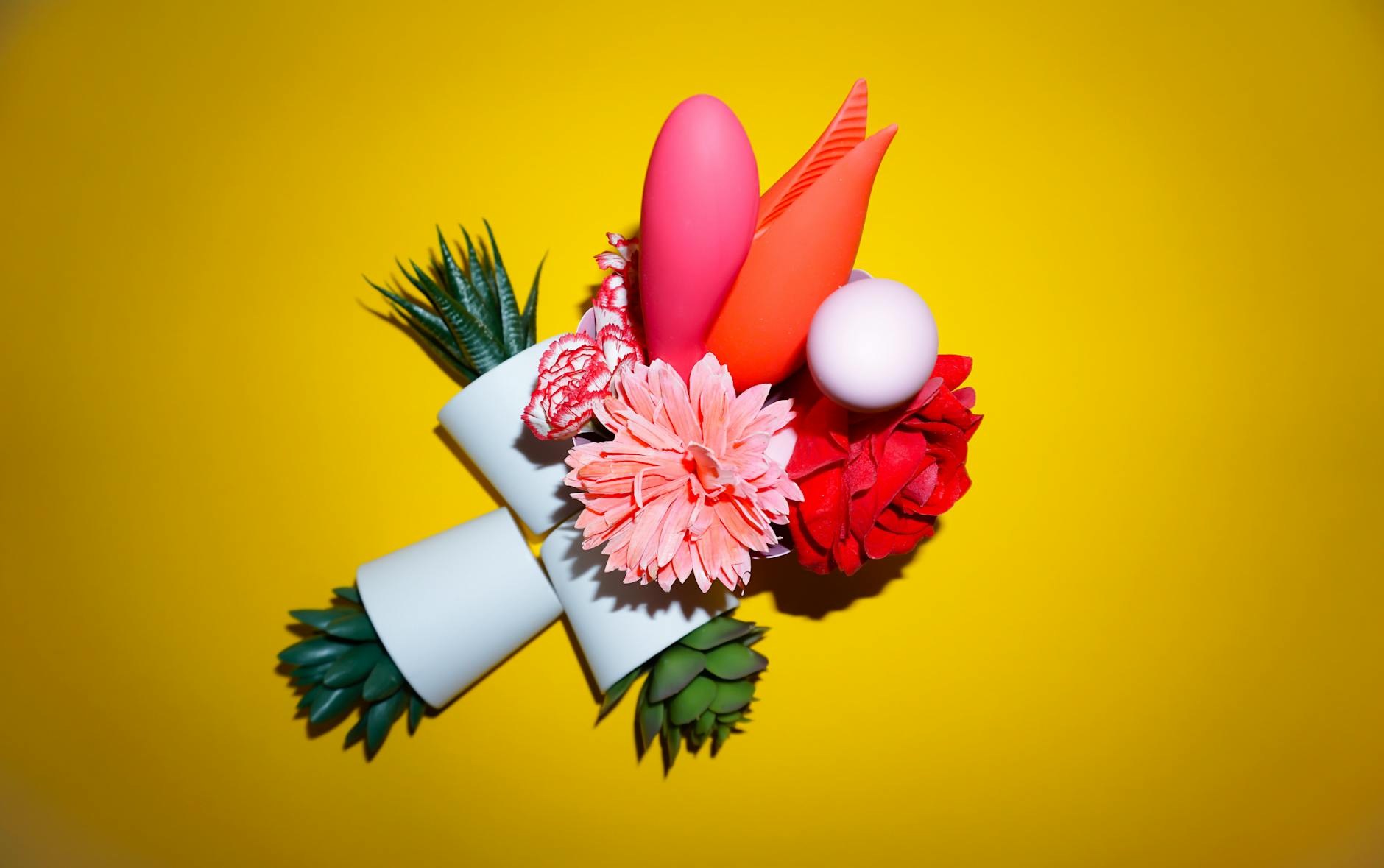
How pressure kills desire (and why you're not broken)
Let's be real. After five, ten, or twenty years together, intimacy often becomes a checkbox. You partner glances over at 10 p.m. with that look. You feel the weight of expectation. Your body tightens. Your mind races through tomorrow's calendar. And sex, which once felt like something you wanted, now feels like something you owe.
This is not a sign your relationship is dying. It's a sign you're human, and you've confused obligation with connection.
The pressure paradox works like this. The more your partner expects sex as evidence of love, the less your body wants to deliver it. Your nervous system reads expectation as threat. Arousal requires safety. Threat kills arousal. You end up in a cycle where both of you feel rejected, and neither of you understands why.
Why pressure specifically kills clitoral response
Here's the physiology part. Your clitoris has over 8,000 nerve endings, and they're exquisitely sensitive to your emotional state. When you're nervous, your sympathetic nervous system activates. Blood flow diverts away from your genitals toward your limbs (fight-or-flight mode). Your clitoris literally cannot respond the way it would if you felt safe and unhurried.
This is why partnered sex under pressure often feels numb or effortful. Your body isn't broken. It's protecting you from performing pleasure you don't actually feel.
The fix is not more communication about the problem (though that helps). The fix is solo pleasure without the script. That's where lemon vibrators come in.
The reset: how solo exploration breaks the pressure cycle
When you use a clitoral vibrator alone, something shifts. There's no one watching. No one's pleasure depends on yours. No timeline. No performance.
You get to remember what arousal actually feels like when it's purely yours.
Lemon clitoral vibrators are particularly good for this because they work with suction rather than vibration alone. That suction replicates oral sensation without the repetitive friction that can feel raw after pressure-based sex. The sensation is rich and varied. You can spend twenty minutes exploring different intensities and patterns without any goal except what feels good right now.
When you've reconnected with solo pleasure, something unexpected happens. That pleasure becomes a reference point. You remember your body's capacity. You stop performing for your partner and start asking yourself what you actually want. And often, you want to invite your partner back in. But differently.
How to restart solo pleasure when you've been in pressure cycles
Three practical steps.
Step one: schedule it like a therapy appointment. Not sexy, I know. But when you've been in pressure cycles, your brain needs permission that this time is yours and won't be interrupted. Carve out thirty minutes weekly. Phone in another room. Door locked. Make it non-negotiable.
Step two: start with the lowest intensity setting. If you're coming to this after months of obligatory sex, your nervous system is dysregulated. Using a lemon vibrator on pattern one or two allows your body to gradually reconnect with sensation without overwhelming it. Spend several sessions here before increasing intensity.
Step three: notice without judging. You might feel nothing. You might feel guilt that you're not thinking about your partner. You might feel resistance. All of that is information, not failure. Write it down if you need to. The goal is awareness, not orgasm.
How to reintroduce partnered intimacy after you've reset
Once you've spent a few weeks reconnecting solo, your nervous system will start to settle. You'll feel less defensive. That's when you can invite your partner in.
Not immediately into sex. First, just conversation. Show your partner what you discovered solo. Say something like: "I realized I've been checked out because I felt like I was supposed to perform. I want to try something different. I want to show you what actually turns me on, without pressure on either of us."
Then, consider using a lemon vibrator together. Hand it to your partner and let them experiment while you guide them. Or use it on yourself while they watch, without any expectation of it leading to partnered sex. This does two things. It reframes the vibrator as connection, not replacement. And it reminds your partner what your actual arousal looks like, rather than the performed version they've been getting.
Many of my clients find that once their partner sees their real pleasure response with a lemon clitoral vibrator, the partner becomes less anxious about performance. Your partner was likely reading your forced response as lack of attraction. Seeing your genuine response is often deeply reassuring.
The conversation: how to name pressure without blaming
If you haven't talked to your partner about the pressure yet, here's a frame that works.
"I love you. I'm also realizing that somewhere along the way, sex became something I felt obligated to do rather than something I chose. That's not about you. It's about me losing track of what I actually want. I want to reset that. It means I'm going to explore solo for a bit. Not because you're not enough. Because I need to remember what my own desire actually feels like."
Most partners, when they understand it's not about attraction or rejection, get it. They might feel vulnerable temporarily. That's normal. Stay curious about their feelings without abandoning your boundary about needing this reset time.
When pressure is hiding something deeper
Sometimes pressure is just pressure. Sometimes it's covering resentment, misalignment on values, or a partner who doesn't actually respect your boundaries.
If you notice that your partner responds to your boundary-setting with anger or coercion, or if intimacy has always felt obligatory rather than optional, that's a signal to work with a therapist. A lemon vibrator can't fix a relationship that's built on obligation rather than consent.
But in most long-term relationships, the pressure cycle is a rut, not a relationship death sentence. You can reset it.
What happens after you reconnect with pleasure
Here's what usually unfolds. You spend three to four weeks exploring solo. Your nervous system begins to feel safe in your body again. You notice that your partner's advances no longer trigger defensive tension. You might even initiate, which feels radically different because you're choosing it.
Your partner notices the shift too. Sex becomes less about checking a box and more about connection. It doesn't go back to early-relationship intensity. But it goes somewhere more sustainable. Somewhere that includes your actual desire, not just your compliance.
That's the point. Not to fake desire back into existence, but to reclaim the pleasure that pressure buried.
If you're interested in other approaches to rebuilding intimacy after relationship strain, you might explore how lemon sexual toys and solo practice help you rebuild confidence after a breakup, or how to use clitoral vibrators when anxiety interferes with arousal. Both explore ways to reconnect with your body's signals outside of partnered dynamics.
FAQ: pressure, pleasure, and lemon vibrators
Will using a vibrator solo make my partner feel replaced?
Not if you frame it correctly. Most partners feel relief when they understand solo pleasure removes the pressure from them to create all of your arousal. Let your partner know this is something you're doing to show up more fully in partnered sex, not instead of it. After you've reset, inviting them to watch or participate often deepens connection rather than threatening it.
How long does it take to reconnect with pleasure after months of obligatory sex?
Three to four weeks of consistent solo exploration usually shifts things. Your nervous system needs repetition to learn that this time is safe. Don't rush it. Some people need longer if resentment is deep. Be patient with yourself.
Can I use a lemon vibrator while my partner is in the room?
Absolutely. In fact, this is often a powerful moment. It shows your partner what real arousal looks like on your body. Some couples find this more intimate than sex itself, because it's not performance. It's genuine sensation. Set the expectation beforehand so there's no surprise.
What if my partner feels hurt when I need solo time to reset arousal?
That hurt is valid, and it's also not your job to fix. You can acknowledge it. "I know this might feel like rejection. It's the opposite. I want to come back to this more fully." Then hold your boundary. A partner who truly respects you will support this, even if it feels temporarily uncomfortable.
Should I tell my partner I'm using a vibrator to reset from pressure?
Yes, eventually. You don't need to report every solo session. But at some point, saying "I've been exploring my pleasure again solo because I realized I'd lost touch with what I actually want" opens conversation. It's honest. It invites understanding. And it prevents your partner from stumbling on a lemon vibrator and misinterpreting it.
What if pressure keeps coming back even after I reset?
Then you have a pattern, not a moment. That's when couples therapy or sex therapy becomes valuable. A therapist can help you both understand why the pressure dynamic keeps re-emerging and build tools to interrupt it. Sometimes it's about deeper incompatibility. Often it's about learned patterns you both can unlearn with support.
Moving forward
Pressure is the enemy of desire. The solution isn't more obligation. It's removing obligation long enough to remember what pleasure actually feels like. A lemon clitoral vibrator gives you a tool to do that alone, and a reference point to bring back to partnership.
Your pleasure matters. Not as an obligation. Not as a service. But as something worth protecting and exploring for its own sake. Start there, and the rest often follows.