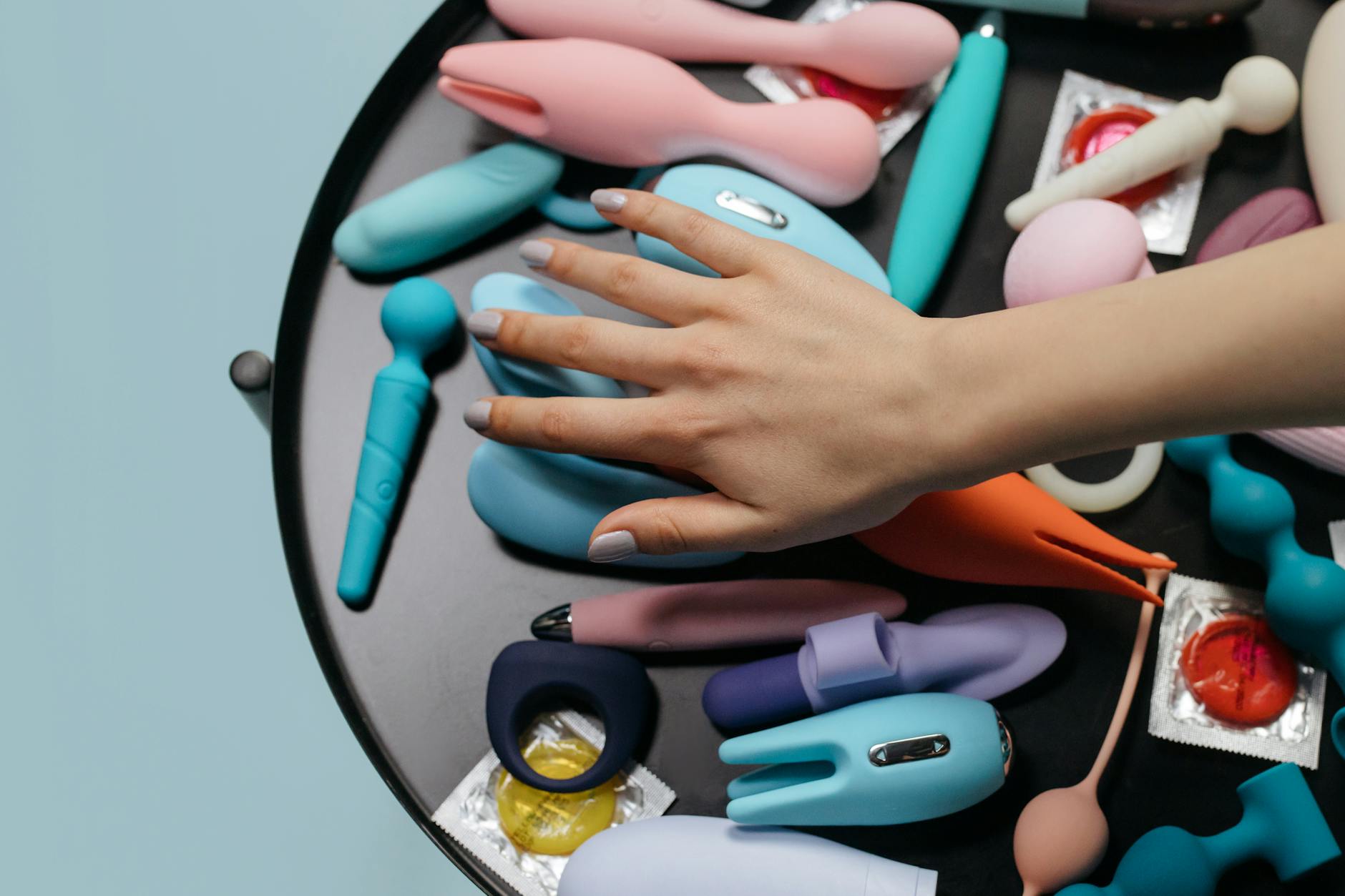
How to Use Lemon Vibrators for Better Pleasure With Hormonal Birth Control
Birth control changes how your body responds to stimulation. Here's what actually shifts, why your lemon clitoral vibrator matters, and how to get back what you've been missing.
Hormonal contraceptives are genuinely brilliant for managing your reproductive health. They're also quietly rewiring your pleasure system. Not in a catastrophic way. But in a specific, measurable way that most people don't understand until suddenly they're wondering why their body doesn't respond the way it used to.
The pill (or patch, or ring, or implant) suppresses the natural surge of testosterone that happens mid-cycle. Testosterone is not a male hormone. Everyone with ovaries produces it, and it's directly responsible for sexual desire, genital blood flow, and the intensity of sensation. Lower testosterone doesn't mean zero desire. It means the desire feels less insistent, less automatic.
Add to that the fact that hormonal contraceptives can slightly decrease vaginal lubrication and increase the perception of genital sensitivity (sometimes making touch feel more irritating than arousing). The result: arousal takes longer to build, sensation can feel muted, and reaching orgasm often requires more direct, sustained stimulation.
For many people, this is manageable. For others, it's frustrating enough to switch methods or add tools. This is where lemon vibrators and specifically clitoral vibrators become strategic.
There's a difference between traditional vibrators and air-suction clitoral vibrators like The Lemon. Traditional vibrators rely on steady oscillation. They work, but they can feel overstimulating or dull when the tissues are less engorged.
Air-suction technology creates a gentle pulse that stimulates the clitoris without direct friction. This is valuable for people on hormonal birth control because the stimulation feels fresher, less fatiguing to the nerve endings, and often produces a different kind of orgasm altogether. Not better or worse. Different. Often more localized, sometimes deeper.
The mechanism matters here: suction actually helps draw blood flow to the area, which partially compensates for the reduced natural lubrication and engorgement that hormonal contraceptives can cause. You're not fighting your body's response. You're working with it.
One thing I see repeatedly with clients on hormonal birth control: they're timing pleasure wrong. Most people still operate on the old model of spontaneous arousal. But when you're on hormonal contraceptives, arousal is less spontaneous and more responsive to context.
This isn't bad. It's actually useful information. It means you can set conditions that support arousal instead of waiting for it to happen.
Three timing shifts that work:
Plan ahead. Not in a clinical way. Just knowing that you have 20 minutes to explore rather than fumbling around hoping something clicks. That certainty itself shifts your nervous system into parasympathetic mode, which is where arousal actually happens.
Extend warm-up time. Budget 15-25 minutes before using your lemon clitoral vibrator. This isn't foreplay. It's scaffolding. Your body needs time to redirect blood flow and produce natural lubrication. Skipping this step makes everything feel harder.
Use your vibrator earlier in the day. Morning and early afternoon tend to have higher natural testosterone levels than evening (yes, even on hormonal contraceptives). If you've been assuming evening is the "sexiest" time, this might explain why your clitoral vibrator feels more responsive at 10 a.m. than at 10 p.m.
Let's talk about lube, because this is where most people get it wrong.
If you're on hormonal contraceptives and you're not using additional lubrication with your lemon vibrator or other adult toys, you're fighting friction that your body can't fully compensate for. This isn't a sign that something is wrong with you. It's just physics.
Water-based lubricant is the safe choice with silicone toys. It rehydrates the tissues, reduces friction, and makes the experience of using your clitoral vibrator dramatically more pleasurable. Not because you're broken. Because you're adapting to a real physiological change.
Use enough. A little dab isn't enough. You want the tissue slick. Reapply if it dries during longer sessions. And yes, you can use lube even if you're producing natural lubrication. They work together.
If you're exploring your lemon vibrator or other clitoral vibrators with a partner, the shift in how your body responds can feel like a relationship problem when it's actually a biology problem.
Separate the two conversations. "My arousal is taking longer because of my birth control" is not the same conversation as "I feel disconnected from you." Mixing them creates defensiveness on both sides.
Here's what helps: tell your partner what you need rather than what's "wrong." Instead of "nothing feels good anymore," try "I need more time to warm up" or "let's try using The Lemon together." Specificity isn't clinical. It's actually more intimate because it's honest.
Many partners feel relieved when they understand that the shift isn't about them. It's about biology. And suddenly a lemon clitoral vibrator isn't a substitute for them. It's a tool that lets you both experience pleasure together in a way that actually works.
Here's the thing: if hormonal contraceptives are affecting your pleasure significantly enough to create real distress, switching is a legitimate option to discuss with your doctor.
Non-hormonal methods like copper IUDs maintain your natural hormone levels entirely. The shift in pleasure isn't dramatic, but it's noticeable. If you've been on hormonal contraceptives for years, switching can feel like getting your body back.
But switching isn't mandatory. Many people adapt beautifully once they understand what's happening. They buy lemon vibrators, adjust their approach, and find pleasure that's just as intense, just different.
Some people on hormonal birth control experience genuine desensitization. Everything feels like you're using your clitoral vibrator through a wet blanket. Touch that used to feel sharp and pleasurable now feels dull.
This happens partly because lower testosterone reduces genital blood flow, which means reduced sensitivity. Three things that actually help:
First, use targeted stimulation. Start with your lemon vibrator on the lower settings (1-3) and focus on the clitoral glans rather than the hood. The glans has higher nerve density. You're not using more power. You're using smarter pressure.
Second, interrupt stimulation. Build arousal with your vibrator for 5 minutes, stop for 30 seconds, build again. This creates contrast. Your nervous system registers change better than steady input. It's why novelty feels more intense.
Third, change position. Lying down, sitting, standing, on your side. Position changes alter the angle of stimulation and engage different nerve pathways. Your lemon clitoral vibrator feels totally different depending on how your pelvis is angled.
A lot of people on hormonal birth control report that orgasms feel less intense or less frequent. Some report the opposite: they're having orgasms for the first time because there's less noise from hormonal cycling.
Here's what's actually happening: orgasm doesn't disappear. The shape of it changes. It often feels more localized, less full-body. Some people describe it as quieter. Some describe it as sharper. Some describe it as taking longer to build but arriving with more certainty.
This isn't worse. It's different. And different is workable once you stop expecting the old shape to return.
Your lemon vibrator actually helps here because it creates a consistent input. You're not relying on spontaneous physical arousal. You're creating arousal through direct, sustained stimulation. Orgasms that happen this way often feel qualitatively different but equally satisfying.
No. There's zero biological interaction. Your vibrator and your contraceptive are operating in completely separate systems. Using The Lemon or any lemon clitoral vibrator doesn't impact how your birth control works.
No, but it can feel permanent. The shifts you experience on hormonal contraceptives are reversible. If you switch methods or stop using hormonal contraceptives, arousal and sensation usually return to baseline within 2-4 months. That said, some people stay on hormonal birth control long-term and find that pleasure simply looks different. This is valid too.
Technically, hormonal birth control flattens your cycle, so there's less fluctuation. But some people still notice subtle shifts in sensitivity across the month. If you do, a lower-intensity option like a lemon clitoral vibrator set to pattern 1-2 might feel better on days when sensation is more muted. But this is optional. Most people use the same approach regardless.
For some people, yes. The psychological reassurance of being desired sometimes helps override the physical friction. For others, adding partner touch is overstimulating when sensation is already muted. There's no universal answer. You have to experiment and notice what your body actually responds to, not what it "should" respond to.
Completely normal. Some people need to increase from pattern 2 to pattern 4, or switch from broader stimulation to more focused stimulation at the clitoral glans. This isn't desensitization in the problematic sense. It's your nervous system adapting to lower hormone levels. It's solvable.
Yes, but your pleasure might feel unfamiliar for the first 4-6 weeks as your body adjusts to the hormonal load. Don't panic. Your sensitivity usually stabilizes. The approach I'd recommend: use your clitoral vibrator gently during this adjustment period, focus on exploration rather than outcome, and notice what actually feels good rather than what you expect to feel good.
Hormonal birth control changes pleasure. That's not a failure of the birth control or a failure of your body. It's biochemistry. Once you understand what's shifting, you can adapt. A lemon clitoral vibrator isn't a workaround for a broken system. It's a tool that lets you explore pleasure in a way that actually works with your hormones instead of against them.
Your body isn't less sexual on hormonal contraceptives. It's differently sexual. And different, with the right information and tools, can be really good.
If you're feeling stuck or like pleasure has genuinely disappeared, reaching out for support matters. You don't have to figure this out alone. Get in touch with our team to discuss what's working and what isn't. We're here to help.